Together We Served has reconnected more military veterans than any other organization or website. If you served in any branch of the US military, stay connected with those you served with by joining TogetherWeServed.com.
Note From the Editor
Spring is on the horizon, Dispatches readers, but military history rarely pauses for the seasons. This month has delivered some of the most dramatic moments of courage, mystery, and decisive action.
This month’s Dispatches opens with Profiles in Courage, featuring LCDR Joseph T. O’Callahan, the Navy chaplain who received the Medal of Honor for his fearlessness aboard the burning USS Franklin in March 1945: fighting fires, ditching burning ammo, and ministering to the wounded and dying.
In Battlefield Chronicles, we look at the oft-forgotten March 1862 Battle of Glorieta Pass, called the “Gettysburg of the West,” where a daring Union raid destroyed Confederate supply trains, stopped their invasion of the Southwest, and kept the rebels from getting the gold of the Rockies.
This month's Military Myths and Legends examines the vanishing of the USS Cyclops in March 1918, which remains one of the Navy’s greatest unsolved mysteries, with 306 souls lost and no trace ever found.
We also look at Operation Allied Force, NATO’s first combat campaign in 1999, a 78-day air war that halted ethnic cleansing in Kosovo without a ground invasion. It was the alliance's first combat test, and one it chose willingly.
Finally, our book review this month is "Faded Yellow Ribbon" by Ryan Kelly, an Iraq War veteran. It's a moving novel, based on a true story, about World War II Marines captured by the Japanese. It really illustrated the lasting costs of war and the bonds that endure between us.
Is there a military legend you want us to tackle? A story you want to look into? If you have any suggestions on topics or comments on stories, send me a message at Blake.Stilwell@togetherweserved.com.
Please send all the information for Bulletin Board Posts, Reunion Announcements, and Association News to Admin@togetherweserved.com.
SSgt Blake Stilwell
USAF (2001-2007)
CONTENTS
1/ Profiles in Courage: LCDR Joseph T. O'Callahan
2/ Check Out Your New Hi-Res Formal Military Service Plaque!
3/ Battlefield Chronicles: The Battle of Glorieta Pass
4/ New Veteran Buddy Link Feature - Connect With Veterans in Your Neighborhood for Friendship and Support
5/ TWS Member Comment
6/ Military Myths and Legends: The Disappearance of USS Cyclops
7/ Preserve Your Old Military Photos: Let Us Help for Free!
8/ Operation Allied Force: NATO's First Combat Mission
9/ Do You Still Have Your Boot Camp/Basic Training Photo?
10/ TWS Member Comment
11/ America's Songbook: Music During a War
12/ Do You Still Have Your Graduation Book?
13/ Ghost Ships of the East Coast: Doomsday Ships
14/ Have A Military Reunion Coming Soon?
15/ TWS Member Comment
16/ Send a Greeting!
17/ Book Review: Faded Yellow Ribbon
18/ TWS Locator Service
19/ TWS Bulletin Board
Profiles In Courage: LCDR Joseph T. O'Callahan
The flight deck was melting. Bombs were cooking off. The aircraft was burning from nose to tail. Sailors tried to breathe through a haze of smoke and engine oil. Some ran. Some froze. Some were already gone. And moving straight into that inferno was a quiet Catholic priest in wire-rimmed glasses, carrying a helmet, his faith, and no fear.
LCDR Joseph T. O'Callahan, the chaplain aboard the USS Franklin, did not have to be there. He could have stayed below decks. He could have waited to administer last rites once the worst had passed. He could have chosen survival.
Instead, he chose presence.
O'Callahan had not joined the Navy to run into fire. He was born in Boston in 1905, studied at Boston College, and joined the Jesuits young. He taught math, physics, and philosophy at Holy Cross, where his lectures were precise and quiet. He loved the beauty of logic. But when the Navy needed chaplains, O'Callahan signed up at age 35. He had never before served in uniform.
At first, he was assigned to shore duty. Then came the carrier USS Ranger. Later, the Franklin. He stood out only because of his age, his calm, and the cross on his helmet cover. When the Franklin was hit, his instincts were not for escape. They were for action. In a ship where the chain of command had been gutted, his presence mattered more than rank.
It was March 19, 1945, during a final push toward the Japanese mainland. The USS Franklin, one of the most heavily armed aircraft carriers in the fleet, had crept to within 50 miles of the Japanese mainland. It was too close. A Japanese bomber slipped through the defenses and dropped two bombs directly into the ship.
The first tore through the flight deck and into the hangar bay, where fully loaded planes sat packed wing to wing. The second set off fuel and ordnance. That was the spark and the chain reaction was catastrophic.
In just a few minutes, the carrier turned into a floating torch. More than 30 aircraft went up in flames. Fire reached multiple decks. Dozens of explosions followed. Rockets shot off inside the hangar. Hatches blew. Lives ended before men even knew they were in danger.
More than 800 sailors were killed. It was the worst damage any U.S. carrier had ever survived.
O'Callahan sprinted across flaming steel. He pulled men out of the wreckage. He formed human chains to get bombs off the flight deck before they exploded. He stepped into the forward magazine, where the ammunition was already hot, and helped cool it down with seawater hoses. He led sailors who had no command structure left. Some were barely standing. They followed him anyway.
What he did that day was not just brave, it was sustained. It went on for hours. He gave orders when officers were dead. He calmed men who could barely think. He found the wounded in smoke and shadows and dragged them into the light. When sailors looked around for someone to follow, they followed the chaplain.
O'Callahan never left the fight. At one point, the captain spotted him carrying a firehose and organizing a rescue crew. The ship's executive officer later said the priest did the work of five men. Some called him supernatural. Others simply called him steady.
He received the Medal of Honor later that year from President Harry S. Truman in a White House ceremony. His citation named the acts in sequence. Last rites. First aid. Bomb disposal. Leadership. It said he acted above and beyond the call of duty. It did not say he was supposed to be dead.
After the war, he returned to Holy Cross. He never sought attention and wore his Medal on formal occasions, but he rarely talked about that day. To him, he was doing what needed to be done.
He died in 1964 from a heart attack. He was only 59. The Navy later named a destroyer escort after him, the USS O'Callahan. But his legacy isn't in steel. It's in the story told by every sailor who watched him walk through fire, not once, but again and again.
Joseph O'Callahan didn't carry a weapon. He carried people. He brought them out of darkness, held their hands when they were dying, and gave them something to follow when it felt like everything had already been lost.
In a war full of noise, his kind of courage was quiet. But no one forgot it. Not the men who survived. Not the ones who saw him stand tall in a storm of fire. And not the Navy, which still calls his name when it teaches what leadership really looks like.
Check Out Your New Hi-Res Formal Military Service Plaque!
We are proud to offer our BRAND NEW, HIGH RESOLUTION PLAQUE OF YOUR MILITARY SERVICE, FREE OF CHARGE, ready to print and frame! This beautiful presentation, which will enhance any living room or den wall, incorporates the following special features:
1/ Available in your choice of 2 convenient sizes: 17" x 13.5" and 11" x 8.5".
2/ Highest resolution, 250 DPI graphics for superb presentation.
3/ Your choice of 22 military and era-related artistic backgrounds.
4/ A ‘Brief Military History’ section featuring a concise summary of your military service.
5/ Your top 3 full-sized medals plus breast and official badges.
6/ Easy upload to our low-cost, high-quality framing partner offering a 10% TWS discount.
Actual TWS Member Statement:
"This framed plaque brought tears to my eyes because it was everything I wanted and more. I will enjoy this for many years to come, and it will be passed down to my sons."
To view your Plaque – Login, and click the Blue Quick Menu Tab, then the Plaque Tab at the top left.
Battlefield Chronicles: The Battle of Glorieta Pass
There's a road that winds through the Sangre de Cristo Mountains in northern New Mexico. If you drive it today, it's quiet. You'll pass ponderosa pines, and rock faces the color of rust. The air smells dry and clean. Somewhere along that stretch, some 160 years ago, a war came and died in the dust.
It was March 1862, and the Civil War finally reached its long fingers into the Southwest. A lot of Americans forget that part. We remember Gettysburg, Antietam, and Richmond. We remember blue and gray lines clashing in cornfields and churchyards. But we forget Glorieta Pass, the fight that happened over three days and changed everything west of the Mississippi.
The Confederacy wanted California. Specifically, it wanted the gold fields of Colorado. It also wanted a railroad and a shot at the Pacific. So rebel troops pushed west through Texas, then through southern New Mexico. By spring, they had taken Santa Fe. A column of 1,300 men, mostly Texans, marched toward Fort Union. If they could take it, nothing stood between them and the Rockies.
The Union scrambled to respond. A few hundred Colorado volunteers under Col. John Slough marched 400 miles through deep snow and wind to meet the rebel threat. Some of them were miners. Some were farmers. All of them were too stubborn to let the Confederacy take more ground.
On March 26, the two sides skirmished near Apache Canyon. By the 28th, they were fighting in full force in the narrowest part of the pass. The Confederates under Lt. Col. William Scurry pushed hard, muscling Union forces back along the trail with artillery and bayonet charges.
On paper, they were winning. On paper.
But while Scurry was taking ground, he was unwittingly losing the fight. High in the hills above the battlefield, a separate Union detachment under Maj. John Chivington had flanked around and found the Confederate supply train. It didn't hesitate. The Yankees torched the wagons, ran off the horses, and burned every ounce of food and ammunition they could find.
By nightfall, the Texans had nothing left to fight with. They held the field, but they couldn't hold the territory. Within days, they were retreating. First to Santa Fe, then to Albuquerque, then all the way back to Texas. They never returned.
It wasn't a large battle. Not by Eastern standards. But it was decisive. Some historians call it the "Gettysburg of the West." But not because of the body count. It was about momentum. Where Gettysburg stopped Lee from heading north, Glorieta Pass stopped the Confederacy from heading west.
Without that win, the Union might have lost New Mexico. Maybe Colorado. Maybe more. That victory locked down the frontier and protected the flow of gold and silver that helped fund President Abraham Lincoln's war effort. The stakes were bigger than the size of the armies. The victory was cleaner than most.
You can walk the battlefield today. It's part of Pecos National Historical Park. There are markers in the dirt and trails through the trees. The wind moves through the canyon just like it did in 1862, but it's hard to feel the weight of it unless you know what could've happened if the wagons hadn't burned.
That's the thing about history. Sometimes, its biggest turns come in small places. Glorieta Pass isn't famous, but it mattered.
New Veteran Buddy Link Feature - Connect With Veterans in Your Neighborhood for Friendship and Support
Those who have served share a unique bond that remains with them throughout their lives. Veterans thrive in the company of other Veterans, simply because the unique culture of military service is common to all.
To provide an easy way for TWS Members to connect with other Veterans in their neighborhood, Together We Served has launched its new, free easy-to-use service called 'Veteran Buddy Link', a free, easy-to-use service specially designed to enable Veterans to seek the camaraderie of other Veterans in or around their Zip Code.
Click the button below to find a Veteran Buddy Connection near you!
TWS Member Comment
It has caused me to think about things I have not in many decades. I have grown to be proud of the U.S. Coast Guard and to dwell on the three of the four great C.O.s I had, along with the other great people and experiences.
Military Myths and Legends: The Disappearance of USS Cyclops
The USS Cyclops, a massive U.S. Navy cargo ship, vanished without a trace in March 1918 while sailing from the Caribbean to Baltimore. All 306 people aboard disappeared with it. No distress call. No survivors. To this day, no one knows what happened. It was (and still is) the deadliest noncombat loss in Navy history. Despite a massive search, no wreckage was ever found.
The ship was carrying manganese ore from Brazil and made a routine stop in Barbados before heading north. She was expected in Baltimore on March 13. She never arrived. In fact, that was the last anyone ever saw of her. The Navy launched an investigation that turned up nothing conclusive. Mechanical failure, bad weather, and German sabotage or a U-boat were considered.
Over time, theories surrounding the disappearance grew darker and stranger. A century later, the fate of Cyclops remains one of the greatest unsolved mysteries in military history.
Some pointed to a mechanical failure. Cyclops had engine trouble leaving Brazil. Others suggested the cargo had shifted during heavy seas and capsized her. Still others floated the idea of German sabotage or a U-boat attack, though there's no real evidence for either.
Then there's the Bermuda Triangle. The vessel vanished somewhere between Barbados and the U.S. East Coast. That patch of ocean has claimed plenty of ships and planes over the years. The Triangle theory gained popularity in the 20th century, especially after other Navy ships, such as the USS Proteus and USS Nereus (both sister ships to Cyclops), also vanished under strange circumstances during World War II.
Of course, the Triangle angle leans more into myth than fact. The ocean is vast and unforgiving. Ships sink. Wrecks are hard to find, especially in deep water. But it's easy to see why the story stuck. A massive U.S. Navy ship vanishes without a trace during wartime. No answers. No closure. It's the kind of mystery that gets passed down through generations.
In 2018, on the 100th anniversary of her disappearance, the Navy held a memorial ceremony to honor the 306 souls lost with the Cyclops. Most were Navy sailors. Some were civilians. All were presumed dead, but none were ever found. Their names are now etched on the World War I tablets of the missing at the Brookwood American Cemetery in England.
The disappearance of USS Cyclops remains one of the strangest cases in naval history. It's a story with more questions than answers, a ghost ship swallowed by time and tide. And until someone finds the wreck, it'll stay that way.
Some legends grow because they're unsolved. Others because they speak to something deeper. The Cyclops does both.
Preserve Your Old Military Photos: Let Us Help for Free!
Do you have old photos from your service days stashed away in a drawer or in a shoe box in your attic? Old photos fade with time and if they are not scanned and preserved digitally, they risk eventually being lost forever.
This is where TWS can help. We have just invested in a high quality Fujitsu book and photo scanner that can scan any size of photo or yearbook. As a service to our members, we would like to offer you a free photo scanning service for your most significant photos from your service which we will then return to you, in original condition, along with a CD containing your photo files.
In addition, we can upload your photos for you to your Photo Album on your TWS Service Profile which will also appear in your Shadow box and available to you to access or download at any time.
Operation Allied Force: NATO's First Combat Mission
On March 24, 1999, warplanes from across Europe and North America streaked into the skies over Yugoslavia. For the first time in its 50-year history, NATO was going to war. It was a joint effort to end a humanitarian catastrophe unfolding beyond its members' borders.
Operation Allied Force was unprecedented: a multinational bombing campaign carried out by a Cold War alliance that had never before fired a shot in anger.
Born in 1949 to defend Western Europe against Soviet aggression, the North Atlantic Treaty Organization spent decades preparing for a war that never came. When the Iron Curtain finally fell, some questioned whether NATO still had a purpose. But by the end of the 1990s, a new threat emerged. Not from Moscow, but from ethnic violence in the Balkans. And in Kosovo, NATO would find its new role on the global stage.
The roots of the conflict lay in the Serbian province of Kosovo, where the Albanian majority population was demanding autonomy and, increasingly, independence. Serbian President Slobodan Milošević, already known for his brutal suppression of dissent in Bosnia, responded with sweeping crackdowns.
In 1998 and early 1999, Serbian military and paramilitary forces carried out a campaign of mass killings, village burnings, and expulsions targeting ethnic Albanians.
With diplomacy at a dead end after the failed Rambouillet talks, NATO faced a pivotal decision. For decades, it had existed to defend members against external threats. Kosovo, however, was not a NATO member.
The violence inside Yugoslavia didn't threaten the alliance. But NATO's moral and political will had evolved. Inaction in the face of ethnic cleansing, just four years after Srebrenica and five years after Rwanda, was unacceptable to many member states. NATO's leaders framed intervention not as an act of conquest, but as a responsibility.
When Operation Allied Force began on March 24, it was the first time NATO launched a military campaign as an offensive action. The operation was strictly from the air—no ground invasion was planned.
Over the course of 78 days, aircraft from 13 NATO countries flew more than 38,000 combat sorties. U.S. bombers and cruise missiles led the way, but European air forces played vital roles, including British Tornadoes, French Mirages, Canadian CF-18s, and more.
The target set included Yugoslav military units, air defenses, communications networks, bridges, and fuel depots. The alliance's rules of engagement were complex. Decisions had to be made by consensus, requiring political coordination at every stage. NATO was not just projecting power, it was proving that a multinational, democratic alliance could act decisively in a crisis.
Serbia fought back with integrated air defenses and dispersed units. On March 27, a Serbian missile shot down a U.S. F-117 Nighthawk, marking the first loss of a stealth aircraft in combat. NATO pilots flew in contested skies, often under strict rules to avoid civilian casualties. Still, errors occurred, including the accidental bombing of the Chinese embassy in Belgrade, a diplomatic disaster that nearly derailed the entire operation.
By June 1999, the cost of continued bombing and international isolation compelled Milošević to yield. He agreed to withdraw his forces from Kosovo and allow an international peacekeeping mission (KFOR) to enter. NATO succeeded in halting the ethnic cleansing and securing the return of nearly a million displaced Kosovars.
But more than that, NATO had redefined itself. Operation Allied Force proved that the alliance could act beyond its borders, enforce international norms, and operate a complex military campaign under democratic consensus. It was a turning point in alliance doctrine, a shift from collective defense to collective security.
For the United States, the operation demonstrated the reach of air power along with the benefits and burdens of leading a coalition. For Europe, it underscored the value of integrated command and interoperability.
And for NATO as a whole, it was a trial by fire: an alliance built to deter war had now become a warfighting coalition, changing the way it would view future crises in Afghanistan, Libya, and beyond.
Operation Allied Force remains a milestone in modern military history. It was the first war fought by NATO, the first major air campaign waged without a UN resolution, and one of the most significant uses of force for humanitarian purposes in the 20th century.
Moreover, it showed that alliances could evolve and that their legitimacy would depend not only on mutual defense, but also on shared values.
The war also left open questions. Could air power alone resolve complex conflicts? How should democracies wage war when every bomb drop is judged in the court of public opinion? And who decides when the defense of peace justifies the use of force?
Those questions are still with us, but NATO's answer in 1999 was clear: doing nothing was no longer an option.
Do You Still Have Your Boot Camp/Basic Training Photo?
Together We Served has a growing archive of more than 23,000 Boot Camp/ Basic Training Graduation Photos which we now display on your Military Service Page and Shadow Box. We also have a growing collection of Yearbooks which we will be made available on the site shortly.
We are still searching for Boot Camp/ Basic Training Photos and Yearbooks. So if you have yours available, please contact us at Admin@togetherweserved.com.
Either you can send us a scanned file of your photo or you can send it to us for scanning. We will add this for you to the Recruit/ Officer Training section of your Military Service Page.
All photos and yearbooks will be returned to you in the original condition along with a CD containing your scanned photo.
TWS Member Comment
In many ways, it's interesting and keeps you in touch with the Air Force and the military in general. There are good opportunities to find friends, especially those who served with you. And there are a lot of benefits available for its members, not to mention the availability and desire of the Administrators to help, which is always there when necessary!
Music, like visual art, can leave a lasting impression of a particular moment or event in time.
Historic research has shown music was prevalent in setting the tone during a massive war or conflict.
World War II: Music Brought People Together
World War II was truly a global conflict occurring on the European front, in Italy, North Africa, the Pacific Ocean region, and with the nations of Western Asia.
On the Allied side, it involved America, the United Kingdom, Canada, France, Russia, Belgium, Australia, New Zealand, and numerous other nations facing the Axis of Germany, Italy, and Japan.
During this era entertainment centered upon movies, phonograph records, radio, and as the war raged travelling USO shows. Most emblematic of the time were the smoked filled dance floors, restaurants, and taverns where relationships began, blossomed, or ended.
These were your grandparents and other Greatest Generation relatives and friends.
Fleeting glances were exchanged, lingering "what if" conversations occurred, dances where you thought the couple would never stop embracing, and hugs. Kisses, embraces, and tears at train and bus stations.
Two of the early and significant songs of the era were with Vera Lynn's sultry voice singing We'll Meet Again and There Will be Bluebirds Over the White Cliffs of Dover.
In 1939, Kate Smith introduced the legendary patriotic song, God Bless America, which carried forward for decades.
The vocalists were many – but most significant were the 17-piece bands of Benny Goodman, Glen Miller, Count Basie, Tommy Dorsey, Dizzy Gillespie, and Duke Ellington.
Men and women in uniform slow danced and jitter bugged to In the Mood, Moonlight Serenade, As Time Goes By, I'm Getting Sentimental Over You, Take the A Train, Till Then, and I left My Heart at the Stagedoor Canteen.
Truly, the 1940s were the golden age of the American songbook.
The Gilder Lehrman Institute of American History observe, "Servicemen had their own social problems. Chief among them was the constancy of their wives and girlfriends back home. Musical examples are "Somebody Else Is Taking My Place" and "Everybody Knew but Me," with the best-known song on this theme being "Don't Sit under the Apple Tree with Anyone Else but Me."
The roots of "Boogie Woogie Bugle Boy of Company B" are credited to Clarence Zylman of Muskegon, Michigan
The Gilder Lehrman Institute added, "Humor also played its role: Glenn Miller recorded Little Bo Peep Has Lost Her Jeep and Cleanin' my Rifle and Dreaming of You. The funniest of all was Spike Jones's manic rendition of "Der Fuehrer's Face," a broad parody of the Nazi anthem Horst Wessel Lied. The refrain included a Bronx cheer that is amusing even to modern ears".
The war ended. Big band music became less prevalent.
America's music was about to change. Music, lyrics, and themes transitioned to the voices of Frank Sinatra, Bing Crosby, Perry Como, Jo Stafford, Dinah Shore, Patti Page, Rosemary Clooney, Peggy Lee, Dinah Washington, and Doris Day.
Vietnam: An Era of Anti-War Rage
America quietly entered and grew into this raging conflict. Historians recognized the war ran from 1962 to 1975.
Over 58,000 American military members perished, 150,000 were critically injured, and nearly 2,000 missing in action. These statistics are not reflective of loses for our allies, the North Vietnamese military or Vietcong, nor countless civilians on both sides.
In the early 1960s music and songs depicting the military offered a pride to serve tone.
In 1962 the Shirelles sang Solider Boy, Diane Renay expressed her love in Navy Blue and Kiss Me Sailor, Sgt. Barry Sadler belted out the Ballad of the Green Beret. Even Snoopy vs. the Red Baron by the Royal Guardsmen might slip into these musical genres.
By the mid-1960s, with war casualties exhibiting a dramatic upswing and the military draft pressing thousands of men into service, popular and hard rock, psychedelic, Motown, and somewhat country music began to shift into an anti-war or protest theme.
In 1965 Barry McGuire sang a chilling song profiling current and future events with The Eve of Destruction. It is still relevant in many aspects.
In the late 60s and well into the 1970s, the music became more intense as the casualty numbers rose. Kent State University had four college students killed and nine wounded by the Ohio National Guard.
Bob Dylan sang Blowing in the Wind and The Times They Are a-Changing, Buffalo Springfield performed For What It's Worth, Universal Soldier was sung by Buffy Sainte Marie, and Donovan.
In one of his last songs, John Lennon, formerly of the Beatles, sang Give Peace a Chance.
The Credence Clearwater Revival group performed Fortunate Son.
In a Rolling Stone Magazine interview John Fogerty of CCR stated, "The hit record wasn't really inspired by any one event. Julie Nixon was dating David Eisenhower. You'd hear about the son of this senator or that congressman who was given a deferment from the military or a choice position in the military. They seemed privileged and whether they liked it or not, these people were symbolic in the sense that they weren't being touched by what their parents were doing. They weren't being affected like the rest of us."
Ruby Don't Take Your Love to Town was first sung by Wayland Jennings in 1966.
In 1969 Kenny Rogers and the First Edition brought this "tear your heart out" Billboard number 19 song back. The song profiled a paralyzed Vietnam veteran seeing his wife leave the house front door most nights.
In months before his passing Marvin Gaye sang the mellow and poignant hit What's Going On.
Groups like the Doors, Jefferson Airplane, The Animals, Rolling Stones, and the Grateful Dead all bellowed music at large anti-war protests, numerous music festivals, and concerts.
The song War was first considered by Temptations. They decided it was not right for them. Edwin Starr stepped up to this 1970 classic which for weeks was number one on the Billboard charts.
Research from Armed Forces Radio and Television Network noted the most requested song of the era by the troops was by the Animals, We Gotta' Get Out of this Place.
The USA History Timeline web site summed up this era, "The music of the Vietnam War era continues to resonate today, serving as a historical reflection of the times. Many of the songs created during this period are still relevant, addressing themes of war, peace, and social justice. The legacy of these artists and their contributions to the anti-war movement have left an indelible mark on American culture and remains a powerful medium for social change."
Over the decades since these wars, numerous television shows and movies offered music and songs from these two tumultuous eras.
Indeed, music leaves a lasting impression.
You will find many of these songs online or through YouTube.
Jeffrey D. Brasie is a retired health care CEO. He frequently writes feature stories and op-eds for various newspapers, magazines, and social media sites. As a Vietnam-era veteran, he served in the U.S. Navy and U.S. Naval Reserve. He served on the public affairs staff of the Secretary of the Navy. He grew up near the tip of the mitt and resides in suburban Detroit.
Do You Still Have Your Graduation Book?
TWS is building a searchable yearbook archive that will be up and running later this year.
What's in it depends on members like you. We have invested in a high-quality Fujitsu book and photo scanner that can scan any size of photo or yearbook.
Allowing us to scan your book helps family and your brothers & sisters find a photo they may have lost along the way.
If you would like your book scanned, email us at admin@togetherweserved.com. We'll send you a flash drive with the scans when we return your book to you. You'll also receive a tracking link via Stamps.com.
Ghost Ships of the East Coast: Doomsday Ships
In the early stages of the Cold War, an impending "Doomsday" weighed heavily upon the minds of Americans. President Truman instituted the Federal Civil Defense Administration, which began issuing brochures, films, and radio advertisements to prepare citizens to survive a nuclear attack. Dog tags were issued to many school children who also went through "duck and cover" drills, as they were trained to curl up under their school desks after a nuclear bomb detonation, flash of light. Siren tests sounded at regular intervals, and national and local publications ran articles about the imminent danger of nuclear war. Radio dials were marked with triangles at stations that would be used by CONELRAD broadcasts, which would kick in as soon as all regular broadcasts ceased after the alarm sounded. Some American citizens were building backyard bomb shelters while the local government, as well as private corporations, established larger shelters under various buildings. Many believed that the best of these efforts would be hopeless in the event of a nuclear nightmare.
The military kept strategic bombers in the air and submarines at sea. The subs carried ballistic missiles (SLBMs—Submarine-Launched Ballistic Missiles), providing a mobile and stealthy means of delivering powerful nuclear firepower. A Ballistic Missile Early Warning System (BMEWS) was developed to detect missile launches coming in from Russia. A DEW line consisting of enormous radar structures was established to warn against a nuclear attack coming across the North Pole. Each side raced to gain nuclear superiority with Intercontinental Ballistic Missiles (ICBMs). The United States developed Multiple Independently Targetable Reentry (MIRV) weapons. Although not an official strategy of the military, a concept that emphasized neither side would survive a nuclear war was known as Mutually Assured Destruction (MAD).
Nevertheless, the United States government made contingency plans for Continuity of Government (COG) in the event of a nuclear attack. Several Command Posts were developed as part of a Doomsday Plan to relocate the President (with his Emergency Action Documents--EADs), Joint Chiefs, Cabinet, Supreme Court, and Congress to secure locations. These Alternate Joint Communication Centers (AJCC) were part of the National Military Command System (NMCS). There were three factors crucial to determining the likelihood of AJCC success: arriving safely at the location, avoiding the effects of bombs, and establishing critical communications links.
Seeking to be victorious in a potential nuclear war, authorities developed a plan for using the United States nuclear arsenal and designated it the Single Integrated Operational Plan (SIOP). The goals of the Doomsday Plan (a gruesome term that included SIOP, COG, and various sub-strategies) were to ensure that order was preserved in society, the economy was not destroyed, food was rationed, and cultural artifacts (such as the Declaration of Independence) were rescued. There were nuclear flash sensors placed around the country. Code words were provided for selected officials, and phone numbers were given that bypassed the normal phone systems. A broadcasting center was set up under the name Wartime Information Security Program (WISP) to control what information was released to the public, including prerecorded messages from the President. However, the ultimate goal was to ensure the government survived and could maintain adequate information for decision-making through surveillance and analysis of world events. To do that, it was necessary to establish communications between the President and commanders of military forces, as well as with leaders of allied and enemy governments.
Although the government certainly consisted of several entities, the President was probably the top priority of COG for obvious political and symbolic reasons. Therefore, the President needed to be transported safely to a location that had maximum bomb avoidance and communication capabilities. Logically, more than one option was made available.
Obviously, a presidential "bomb shelter" was a necessity. Code-named "Site R", and built deep under Raven Rock mountain, a Deep Underground Communication Center (DUCC) was coordinated by the Army from Ft. Ritchie near the Maryland-Pennsylvania border a few miles from Camp David. To disperse other governmental leaders and functions, other bunkers were located at Berryville, Virginia, under Mt. Weather (code-named "High Point"); Culpepper, Virginia (Mt. Pony); and White Sulfur Springs, West Virginia, under the Greenbrier Resort (code-named Casper).
Some of the underground Command Posts had several hundred full-time, 24-hour support personnel and a capacity to maintain about 3,000 "guests." The bunkers had thick walls of steel-reinforced concrete, and some had barbed wire and armed guards with dogs. Besides communications activities, the centers had individual priorities that included Federal Reserve computers, billions of dollars in currency, and Federal Emergency Management Agency (FEMA) national emergency coordinating equipment. There were sleeping quarters, war rooms, amphitheaters, kitchens, dining areas, infirmaries, brigs, psychiatric cells, barbershops, storage rooms, sewage treatment facilities, body storage/disposal areas, gun ranges, and decontamination showers. These were located in buildings up to four stories high. There were detailed plans in place for every conceivable scenario, including keeping a current database of medications for members of Congress.
Regarding the relocation of the President, a weakness of the DUCC was the vulnerability of the antennas needed for communication. Also, there was the danger of sabotage (including attacks upon officials attempting to enter the bunkers) from enemy agents already inside the country. Since the projects were so monumental when they were constructed, many people had some knowledge about the sites.
Another variable to increase the odds of the President surviving Doomsday was a movable location, which made targeting more difficult. The National Emergency Airborne Command Post (NEACP), code-named "Night Watch", consisted of several shielded and specially configured Boeing airplanes (stationed at Andrews Air Force Base near Washington, DC) with at least one plane ready for takeoff within 15 minutes of an attack alert. When the president traveled on Air Force One, a NEACP plane often flew to a nearby location.
Weaknesses of NEACP, for presidential relocation, were getting off the ground in time, jet intakes getting fouled, and the limited amount of time the planes could stay in flight.
A National Mobile Land Command Post (NMLCP) was proposed at one point. Declassified documents indicate it was not recommended for implementation, but the documents found by this writer do not say why. A submarine Command Post was also planned, but there were problems at that time with getting evacuated personnel aboard and having good communication abilities. Both of these alternatives may be more viable today (2006) and are probably highly classified.
Beginning in late 1950, there was a special unit of helicopter teams (code-named "Outpost Mission") stationed at Olmstead Air Force Base in Pennsylvania. Their duty was to fly to the White House and relocate the president to one of the sites briefly described above or to a National Emergency Command Post Afloat (NECPA). Although the DUCC and NEACP options still exist (2006), as the "Doomsday Clock" moved closer to midnight during the highly volatile 1960's, the NECPA ship was very likely the most workable choice for assurance of presidential survival had the United States been the target of a nuclear attack.
Two ships were uniquely configured and assigned the NECPA duties. The NECPA ships had good maneuverability to assure safe arrival, a reasonable probability of bomb effect avoidance, and were capable of state-of-the-art communications. The sister ships USS Northampton (CC-1) and USS Wright (CC-2) alternated the alert duty every two weeks as a potential floating White House/Pentagon. The NECPA strategy was to keep one of the ships somewhere off the East Coast. With only the customary naval acknowledgments, just outside of Norfolk, the ships would silently sail past each other as the alert ship was relieved in order to enter port for replenishing and much-needed rest and recreation for the crew.
Both the Wright and the Northampton had a huge dish-like structure used for Troposphere Scatter Communications (TROPO.) There were land-based TROPO dish sites located in Massachusetts, North Carolina, and Delaware. The alert ship usually operated within a few hundred miles of one of those land sites. The gyro-stabilized TROPO equipment provided the capability for access to commercial and military telephone networks. To maintain operational security, the ships took steps to decrease radio direction-finding activities from hostile sources attempting to trace the location of the alert ship. The TROPO system provided, difficult to zero in on, telephone, teletype, and data circuits with top priority for the Command Posts. The NECPA ships used voice radio call signs Zenith (Wright) and Sea Ruler (Northampton) during communication with other ships, aircraft, and shore stations.
The mission of the two ships was to handle communications and command data for the strategic direction of military operations world-wide. The ships, operated under the SIOP, and were always ready for the president (with special presidential quarters). Both ships had access to White House Situation Room classified information. If a nuclear war had erupted the alert ship was third in line behind the Strategic Air Command (SAC) and the North American Air Defense Command (NORAD), for full command to maintain Continuity of Government and control of the United States Armed Forces and nuclear weapons.
The Wright and Northampton had interior spaces capable of pressurization to prevent contamination from nuclear fallout. The Northampton had an exterior salt-water wash down system. Each ship had a smaller replica of the Pentagon's War Room. The Wrights' command compartments had projection equipment with large screens and a wall of status boards and maps mounted on tracks which could be rolled into view. One entire space was filled with teletype printers. The crew totaled over 1,200, with 200 of those with duties just to operate and maintain the communications equipment.
Life aboard ship was tedious and stressful, mixed with friendship and macho mischief. There were highly restricted areas where only those with appropriate security clearances were allowed to enter. Men from each branch of the military service, as well as CIA personnel, were assigned to both Wright and Northampton. Also, many government officials and high-ranking military officers from all branches of service frequently visited each ship. The command ships were kept "spit-shined" from stem to stern, but the crews enjoyed excellent chow since the cooks requisitioned the same supplies to prepare meals for all of the ship's company and guests. In 1968 the Wright received the prestigious Ney Award for the best Large Mess Afloat for the entire fleet worldwide.
The USS Wright was the newer of the two ships both of which had been converted from previous designations (Northampton from CLC-1, cruiser, in 1961 and Wright from CVL-49, aircraft carrier, in 1963). She had, for that era, the most elaborate and powerful communications equipment ever installed aboard a ship. Her "voice of command" could reach any ship, aircraft, or station in the world. Two antenna masts were 114 feet tall (156 feet above the water) and able to withstand 100-mph winds. The Wright had satellite communications (SATCOM) and carried a specially designed helicopter that pulled a wire cable nearly two miles high to serve as an antenna for SVLF (Shipboard Very Low Frequency) communication with submarines. A Battle "E" was awarded to the Wright in 1968 for highest scores in her Atlantic Fleet cruiser-destroyer force squadron competition.
Presidents Eisenhower, Kennedy, and Johnson went aboard the Northampton before the Wright was commissioned. In April of 1967, the Wrights accompanied President Johnson to the Latin American Summit Conference held in Uruguay. In January 1968, the Wright was urgently called back from the Florida area and placed on high alert when the USS Pueblo was captured by North Korea. President Johnson traveled to Central America in July 1968 for a meeting of the Presidents of the Central American Republics. The Wright was in the shipyards and was unable to get underway. With short notice, the Northampton left port at about 0200, traversed the Panama Canal, and lay off the Pacific Coast of Latin America while President Johnson met with the leaders of El Salvador, Nicaragua, Costa Rica, Honduras, and Guatemala.
The NECPA ship, which was on alert, often sat just off the East Coast of the United States while running helicopter and communications operations. Coastal residents would go to bed with nothing on the horizon and awaken to see a dark, strangely shaped, ship silhouette materialize through the morning fog. The ship would be there for a day or so and then "disappear" out to sea, leaving an empty horizon. This experience probably had the aura of a mysterious, even ghostly, occurrence. Although it was rumored that a submarine shadowed the alert ship, as far as the eye could tell the NECPA ship cruised all alone. At the top of each daily Deck Log for the duty ship was this entry: "00-04 Wright is alert ship NECPA operating independently in accordance with COMCRUDESLANT message 171840Z of Feb 1968."
The NECPA mission was a vital part of the Cold War for almost ten years. The men who served aboard the NECPA ships served their country well and contributed to keeping the world from a nuclear holocaust. The USS Northampton and the USS Wright were decommissioned a few weeks apart in the spring of 1970 when communication capabilities became more sophisticated. The NECPA ships also became susceptible to satellite surveillance and Soviet aircraft based in Cuba. Additionally, Soviet submarines had become more improved and numerous in the Atlantic. Both the Wright and Northampton were scrapped long before the United States won the Cold War in 1991. Now, only memories remain of the East Coast "Ghost Ships" that waited for a Doomsday that did not happen on their watch.
Have A Military Reunion Coming Soon?
TWS has nearly 2 million members who served in a wide range of units, ships, squadrons and duty stations. Get more people to your Reunion by sending your Reunion information to us in the following format and we will post it for free in our Reunion Announcements on Together We Served, in emails that go to our members and in our Newsletters.
Service Branch Reunion Applies To:
Your Reunion Name:
Associated Unit or Association:
Date Starting:
Date Finishing:
Place Where Held:
City:
State:
Contact Person:
Contact Phone Number:
Contact Email Address:
Website:
Other Comments:
TWS Member Comment
I'm delighted to see so many people who I have served with or came across after so many years. It's a delight knowing that I'm part of an exclusive group of people who all share in the same common bond of our pride in our service and what we've done, as well as rekindling the memories of all the good times (and bad times) that we've shared during our time together. We may have packed away our service uniforms, awards, and so forth - but we haven't stored our memories away. 'Togetherweserved.com' helps us to keep this bond together! While there are many important and satisfying features about TWS, the most valued one is documenting your military history on your personal profile. If you don't capture it in detail now, most of what you did will go unrecorded, resulting in a tragic loss of the Coast Guard's honored history and of the sacrifices made by many. I know you are proud of what you did while serving your country and what it meant to you. Here is a chance to express that pride to your friends, family, and future generations through a special URL available to non-members. I urge you to take advantage of it before it is too late.
Send a quick Greeting Card to another TWS Buddy or New Member by clicking on the blue "Send a Greeting" button on their Profile Page.
A Range of Different Cards are available.
Book Review: Faded Yellow Ribbon
by Ryan Kelly
"Faded Yellow Ribbon: The Untold Story of the Brave Men Who Endured the Greatest Survival Story of World War II" by Iraq War veteran Ryan Kelly is a Pacific War novel with a long memory. Most importantly, it's inspired by a true story.
It isn't just interested in what happened in 1942, or how a handful of Marines survived the fall of the Philippines and the brutality that followed. It's also interested in what those years do to a person afterward, when the war is over on paper, but not in the body or the mind.
Mel Sheya (a real World War II POW) is decades removed from the fighting, sitting in a therapist's office, and finally letting the story out. That choice sets the tone right away. This isn't a war story that treats combat like a highlight reel. It's a war story that understands the real arc is often longer than the campaign, and that survival comes at a price.
Back in the Philippines, the novel commits to the slow, lived-in texture of wartime life. The shift from identity to endurance is one of the book's strongest throughlines. You watch the four Marines captured by the Japanese recalibrate, not once, but repeatedly, as circumstances strip away comfort and control.
The heart of the novel is Sheya's captivity, and Kelly handles it with seriousness and respect. The suffering isn't stylized or turned into a spectacle. Instead, it's presented as the relentless, grinding reality it was: hunger that changes how you think, sickness that won't go away, and the exhausting physical and mental endurance required just to stay alive.
What makes it all work is that the book doesn't pretend that courage is always dramatic. Sometimes it's ugly. Sometimes it's small. Sometimes it looks like choosing not to give up on someone when you barely have enough strength left for yourself.
One of the more moving elements is the way the novel allows space for dark humor and stubborn personality, a military reality that those who serve know all too well. The jokes, the needling, the occasional absurdity are not there to make the experience "fun." They're there because these Marines are humans and reaffirm their humanity. In that sense, the lighter moments don't interrupt the gravity. They underline it.
Kelly's style is direct and readable, which serves this kind of story well. The prose keeps you moving through material that is, by design, heavy, and it lets the events and choices carry the emotional weight. The pacing also benefits from that clarity. This is a long book, and it largely uses that length to deepen relationships, feel the time passing, and make survival feel like something you've actually traveled through.
The scale is part of the appeal. It wants you to live with these characters long enough that their losses feel personal, and their endurance feels hard-won. Readers who like World War II fiction that leans into endurance, comradeship, and the psychological aftermath will find a lot to appreciate here.
By the end, "Faded Yellow Ribbon" is less a war adventure and more like a tribute to the people who endured the parts of the war that don't fit neatly into popular memory. It's a story about what it took to survive, what it cost in the long run, and what it means to carry that survival into a life that's supposed to be normal again.
"Faded Yellow Ribbon: The Untold Story of the Brave Men Who Endured the Greatest Survival Story of World War II" by Ryan Kelly is available on Amazon starting at $9.99 for the Kindle version or $24.99 in paperback.
TWS Locator Service
Available for Together We Served members only! Together We Served has two hard-working Marines devoting their time and energy to help our members find long-lost friends who are not yet members of our Together We Served.
If you are looking for someone, email us at admin@togetherweserved.com with name, approximate age, where they were from, last known address, marital status, and name of spouse. We'll do our best!
TWS Bulletin Board
If you wish to make a post to our new Bulletin Board - People Sought, Assistance Needed, Jobs Available in Your Company, Reunions Pending, Items for Sale or Wanted, Services Available or Wanted, Product or Service Recommendations, Discounts for Vets, Announcements, Death Notices - email it to us at admin@togetherweserved.com.
Service Reflections Video of the Month
TributetoaVeteran - Cpl Martin McWilliams U.S. Marine Corps 1953-1956
Are You a Writer?
As you know, Together We Served is always looking for interesting articles to post to our forums and in this newsletter. Have you written any military-related articles you want to share with a broader audience? Send your submissions to admin@togetherweserved.com, and you may see them in an upcoming issue.
TWS Flyers Available
Do you have a reunion coming up and would like to spread the word about Together We Served? We now have flyers that help explain who we are and what we do.
Send your requests to admin@togetherweserved.com. Please include your name, address, and the number of flyers you require.
TWS Invite Cards
Did you know we have Together We Served invite cards you can hand out to any veteran you meet? We have included a handy QR code on the back of the card so prospects can scan it right away to get started.
If you would like some cards, email us your name and address at admin@togetherweserved.com, and we will send them to you.
Do You Work at a VA?
As you may know, TWS has been working with the VA to help our veterans who may be isolated find local veterans for companionship and camaraderie. We also provide a way for them to display their military history to family and friends, and to find those they may have served with for a buddy statement.
TWS has developed several handouts that can be displayed and given to any veteran you believe would benefit from TWS's services. We have a small poster, a brochure, and business cards. We will provide you with the display holders.
If you would like any of these materials, please email me directly at diane.short@togetherweserved.com, and I will be happy to mail them to you.
Your Invite QR Code is now available to download to your phone and share with the veterans you may meet. Scanning this QR code will give you credit for their membership. You receive 6 months of full membership for every 5 people who join through your invite. If 50 people join, you'll receive a lifetime membership!
Military News
John Ripley, the Marine Who Blew Up the Dong Ha Bridge, to Receive the Medal of Honor
By Douglas Lindsay Military Times
More than 50 years after he hung beneath a bridge under enemy fire to stop a North Vietnamese armored invasion, the heroic actions of John Ripley are set to be recognized with the nation's highest award for valor.
As North Vietnamese tanks massed on the far side of the river in 1972, Ripley climbed onto the Dong Ha Bridge carrying explosives — knowing that if the bridge stood, the invasion could roll south.
During the opening days of the Easter Offensive, Ripley hung from the steel girders of the Dong Ha Bridge in the northern part of South Vietnam, hauling hundreds of pounds of explosives across the structure and rigging them by hand as enemy forces advanced.
When the charges detonated, the bridge collapsed into the river below, halting a massive North Vietnamese armored advance and buying critical time for South Vietnamese and U.S. forces to respond.
Now, more than five decades later, Ripley's extraordinary act of courage has been formally approved by the Senate, through special legislation, for the Medal of Honor.
In an exclusive interview with Military.com, Ripley's son, Tom Ripley (also a Marine), described the moment as both deeply emotional and long anticipated.
"It's kind of surreal for my family," he said. "I've spent my entire life watching this play out. And now suddenly we're at this moment."
For generations of Marines, the story of Ripley hanging beneath a bridge while rigging explosives under enemy fire has become legendary, a moment that captures Ripley's leadership philosophy: Mission first, Marines always.
A War Nearing Its Most Dangerous Moment
By the spring of 1972, the Vietnam War had entered a new phase. The United States had begun withdrawing most of its combat forces, leaving a small advisory presence as part of the Nixon administration's Vietnamization strategy.
Only about 6,000 U.S. troops remained in the country, many serving as advisors embedded with South Vietnamese units.
Ripley, then a Marine Captain, was assigned as an advisor to the 3rd Battalion of the South Vietnamese Marine Corps in South Vietnam.
Across the Demilitarized Zone, North Vietnamese forces launched a massive conventional invasion involving tens of thousands of troops supported by tanks and artillery.
For the soldiers near Dong Ha, the situation quickly became dire.
"There were 300 men in the battalion with one U.S. Marine advisor," Tom Ripley said. "Across the river were tens of thousands of North Vietnamese soldiers and over a hundred tanks."
The only obstacle between those armored columns and the road south was a single bridge.
The Bridge That Could Decide the Battle
The Dong Ha Bridge spanned the Cua Viet River near the city of Dong Ha. It was the only crossing in the region capable of supporting heavy armored vehicles.
If North Vietnamese tanks crossed the bridge intact, they could surge south into the northern provinces of South Vietnam.
Ripley and other advisors quickly grasped what they were facing.
On the far side of the river were elements of the North Vietnamese 308th and 304th Divisions, supported by tanks from the 203rd Tank Regiment.
"We've got to blow that bridge at Dong Ha," Ripley reportedly told fellow advisors. "We've got to buy some time."
The bridge had to be destroyed. But there was no prepared demolition plan. Someone would have to climb beneath the bridge and place the explosives by hand.
Hanging Beneath the Bridge
Ripley was the only officer present with the demolitions expertise required for the mission.
A graduate of Army Ranger School, and the Royal Marines Commando Course, he had the specialized training needed to improvise the demolition. But executing the mission would require extraordinary endurance.
The bridge was under enemy fire, and the explosives available had to be carried manually. Ripley began hauling ammunition crates packed with explosives under the bridge.
Then he climbed beneath the steel girders supporting the roadway. Suspended above the river, he began attaching demolition charges.
Ripley made five separate trips, dragging explosives (500 pounds in total) across the beams and positioning satchel charges and blocks of Composition B.
Enemy rounds struck the structure around him. Exhausted and injured, Ripley later recalled repeating a simple prayer to keep moving.
"Jesus, Mary, get me there."
On the bridge above, South Vietnamese Marines held their positions, firing anti-tank rockets and machine guns to prevent North Vietnamese armor from crossing.
"My father would be the first to say it wasn't just him," Tom Ripley said. "It was the entire battalion holding those tanks back while he worked."
Eventually, Ripley detonated the charges. The bridge collapsed into the river.
Buying Time for the Joint Force
The destruction of the bridge halted the armored advance. North Vietnamese forces were forced to stop north of the river, creating a bottleneck that allowed other advisors the ability to escape and allowed U.S. airpower and naval gunfire to attack the concentrated enemy units.
Among the ships providing support was the destroyer USS Buchanan (DDG-14), which moved close to shore to deliver continuous naval gunfire.
Ripley later reflected on the moment with blunt honesty.
"The idea that I would even finish the job before the enemy got me was ludicrous," he once said.
"When you know you're not going to make it, a wonderful thing happens: you stop being cluttered by the feeling that you're going to survive."
The destruction of the bridge slowed the invasion long enough for South Vietnamese forces to regroup and mount a defense.
A Family Defined by Service
For Tom Ripley, the story of Dong Ha Bridge was never just a historical event. It was part of the fabric of his life.
The Ripley family has a deep tradition of service in the Marine Corps.
"My father and his brothers were Marines," Tom Ripley said. "One of them was killed in action. My brother and I are Marines. My nephews are Marines. My son is finishing his senior year at the Naval Academy."
In the Ripley household, military service was less a topic of conversation than a shared way of life.
"It's not something we talk about," he said. "It's something we live."
Growing up, Tom Ripley said his father rarely focused on his own actions during the battle.
Instead, he emphasized the Marines and sailors who fought alongside him.
"He always said nothing great is accomplished by the individual," Tom Ripley said. "It's always accomplished by the team."
The Marines Who Were There
For the surviving veterans who fought during those desperate days in 1972, the Medal of Honor represents something larger than the recognition of a single Marine.
Many of the officers involved in the battle remained close throughout their lives. Some are now in their 80s and 90s. Tom Ripley recently called several of them to share the news that the award was moving forward.
Their reactions were immediate and emotional. "It's about damn time," several of them told him.
One Marine general who fought in the battle told Tom Ripley that the destruction of the bridge likely saved his life.
"I'm here today because your dad blew that bridge," he said.
For many of those veterans, the recognition represents something deeply personal.
"This closes the circle," Tom Ripley said. "One of theirs is being recognized for something they all went through."
A Long Road to Recognition
Ripley initially received the Navy Cross for his actions at Dong Ha Bridge. But many Marines believed the award never fully reflected the magnitude of the battle.
Over the years, multiple efforts were made to upgrade the award.
Ripley died in 2008 before the recognition could be reconsidered. Still, his son never stopped believing it would happen.
"I always believed our country would eventually see this the right way," he said.
A Legacy for Future Marines
Within the United States Marine Corps, Ripley's story has become a leadership lesson for generations of young Marines.
Ripley often summed up leadership in simple terms. "Leadership is a contact sport."
To him, leadership meant being physically present where decisions mattered most.
"You have to be where the metal meets the meat," Tom Ripley recalled his father saying.
It was a philosophy Ripley lived by throughout his career.
For Marines studying the battle today, the story represents something deeper than heroism. It represents the responsibility leaders carry when the mission depends on them.
Bringing the Veterans Together
Tom Ripley hopes the award ceremony will bring together the surviving Marines who fought in that battle.
Many of them have spent decades carrying the memory of those days.
"There are still people alive who saw this in color," he said. "They need to be in the room."
For the Marine Corps and the broader military community, the recognition represents long-awaited acknowledgment of one of the most extraordinary acts of battlefield leadership in modern American history.
And for a son who has spent decades preserving his father's legacy, the moment carries a deeply personal meaning.
"I miss my dad," Tom Ripley said. "But to see him recognized alongside those who wear that medal — it's incredibly special."
More than five decades after a Marine crawled beneath a bridge to stop an army, the nation is finally recognizing the moment that Marines have remembered for generations.
From Iraq to Iran: How Congress Handed Over War Powers to the Presidency
By Nick Mordowanec Military Times
The role of Congress in wartime scenarios has drawn more attention and scrutiny in the past 25 years, beginning with the claims of weapons of mass destruction that led to years of war in Iraq and Afghanistan, to the current situation where strikes were fired at Iran by U.S. and Israeli forces without any legislative approval.
Federal law for decades has legally dictated how Congress not only has "the power of the purse" but also a say for American constituents of whether the nation should go to war. That second aspect was enshrined within the War Powers Resolution of 1973, which according to the long-held system of "checks and balances" provides a legislative fulcrum over the executive branch and forces congressional approval to commit U.S. Armed Forces into conflicts.
Such requirements involve the president notifying Congress within 48 hours of military action while prohibiting service members from being in a hostile warzone for more than 60 days. The law gets muddied, however, due to only Congress being able to declare war and appropriate military funding while the president remains the commander in chief.
When President Donald Trump approved military strikes against Iran on Feb. 28, Congress showed a lack of willingness to challenge the administration in a silence that, according to Kelley Vlahos, editor-in-chief at Responsible Statecraft, was "very regrettable but not unexpected."
"I think we knew from the outset that it was going to be very difficult to bring Republicans on board for the vote," Vlahos told Military.com. "We, of course, know that Rand Paul is a for-certain vote on constitutional matters. … There was some hope that it would get a few [more] over there."
But it's really regrettable because when you think about it, this is a vote to have a vote. And it does seem like, for the last 20 years or so, Congress has been pretty resigned to the executive taking on matters of war, including taking the country to war without putting their own skin in the game.
That's what she described as particularly "disappointing" for Americans who are the constituents of those elected officials, not to mention the constitutional checks and balances under Article II.
"Obviously, the president has the authority to take the country to war when it's under imminent threat," she said. "But we have seen time and time again presidents taking the country to war for much less, for very debatable reasons under that imminent threat clause."
Democrats Side With GOP
The war powers resolution pushed by mainly Democrats in both the U.S. Senate and House met its anticipated fate, falling short by a 53-47 mostly party line vote in the Senate and by a 219-212 vote in the House. Only Republican Sen. Rand Paul of Kentucky joined Democrats.
In the House the day after, Democrats defected and dealt their party a major blow considering that if they would have stayed put the resolution would have passed after Republican Reps. Thomas Massie of Kentucky, a sponsor, and Rep. Warren Davidson of Ohio, joined Democrats in the vote.
Those four Democrats were Reps. Greg Landsman of Ohio, Jared Golden of Maine, Henry Cuellar of Texas, and Juan Vargas of California.
Bush, Obama and Trump
Vlahos said that the impulse to let the president take ownership of all things war has been in motion for many decades, but particularly after Sept. 11, 2001, even as Congress at that time gave President George W. Bush authorization for the use of military force (AUMF) in Afghanistan to go after Al-Qaeda.
"And then they gave a similar AUMF to Bush to go into the war in Iraq," she said, "so there was buy-in on that."
Unfortunately, those AUMFs are still being used for any action, operation, war, conflict, whatever you want to call it, that presidents have wanted to pursue. They've just used those AMFs as justification, or sort of like authorization, for what they wanted to do.
That has been true through numerous operations, from Bush to Obama, through the first Trump administration and then during Joe Biden's presidency. Increasingly, according to Vlahos, "Congress just sort of shrugs its shoulders" or engages in purely partisan efforts to support whichever party's president is in power.
"Trump comes in his second term and takes the reins," Vlahos said. "He says, ‘Listen, you've been ceding war powers to the executive for so many years. I'm just going to do what I want.' He's sort of ripped up any pretense of going to Congress or explaining to the American people what the strategy is. He just does it."
Getting Lawmakers On Record
Vlahos said the partisanship of Washington lawmakers who are collectively elected by tens of millions of Americans is particularly "unfortunate" when individuals like Rep. Rand Paul, or Sen. Tim Kaine, make "full-throated arguments" for Congress to reinstall its own authority and have every member in each chamber on the record for posterity.
"There's this more long-term concern that if they vote for it and then it turns into another Iraq, they are forever on that record," she added. "And some reporter 20 years from now, is going to say, ‘Hey, did Congressman Smith actually vote for this?
"‘Oh, yeah. We made some statements along the way, even though the rest of the world knows it was a big fat failure.' So, I think that there's a concern there, but that's no reason to abrogate your duty as a member of Congress."
The war powers resolution is not a sign but merely another symptom of a more partisan Washington within the past 2-3 decades.
Votes can also be salvaged in other ways, Vlahos said, including potential votes on supplemental resolutions to authorize more U.S. dollars towards the overseas conflict. That would also put lawmakers on the record.
"Congress has ceded so much of its power and authority that they really don't know how to stop this administration from barreling into one war to another," Vlahos said.
Americans' Objections to Current Conflict
Vlahos also alluded to polling, just about all of which has been quite negative towards the current administration.
"This is seemingly optimistic, but I hope that public opinion will turn so fiercely against this war that President Trump will have to acknowledge that and de-escalate or call for a ceasefire, do what he usually does, find some off-ramp where he can save face, just to stop the bloodshed—whether it be our guys or Iranians or others in the crosshairs, and just scale it back and end it," she said.
G. Elliott Morris, a data journalist who authors Strength In Numbers on Substack, posted a table showing all U.S. polling on what is happening overseas. Surveys, asking respondents if they approved or disapproved of the strikes on Iran, were conducted between Feb. 28 and March 4.
In terms of approval percentage, a Reuters/Ipsos poll showed 27%. YouGov showed 37%, CNN showed 41%, and the Washington Post showed 39%.
Even the conservative-minded Fox News showed a straight 50-50 percentage split in approval/disapproval.
Bigger Budget = More Conflicts?
To further complicate U.S. foreign policy and the administrations' future intentions, Trump has called to drastically increase the current U.S. defense budget that already sits at approximately $900 billion. That is expected to be a big talking point come budget talks for the next fiscal year.
A hypothetical $1.5 trillion defense budget could signal even more U.S. interventionism worldwide, not less, according to Vlahos.
She said more money doesn't automatically lead to better readiness or improved policy; rather, it just adds more dollars in certain individuals' and companies' coffers and strategy is bred from finding ways to use such funds "because you've got to spend it."
"Often, defense contractors are asking for more and the forces are asking for more," she said. "And what better way than to say, 'There's a threat here and there's a threat there?' So, it's flip-flopped.
"And until we fix it, I'm afraid that there's always going to be a rush to war before diplomacy. We're going to be putting our military—our men and women who are serving us—in harm's way."
Hegseth's 'Stupid Rules of Engagement' Line and What ROE Actually Do
By Haley Fuller Military.com
At a Pentagon briefing on March 2, 2026, War Secretary Pete Hegseth used blunt language about how the United States would fight, saying there would be "no stupid rules of engagement," "no politically correct wars," and "no nation-building quagmire."
Those remarks became a flashpoint because rules of engagement, or ROE, are not "vibes" or slogans. They are a formal control system that ties tactical force decisions to strategy, law, and escalation management. Human Rights Watch responded the same day by warning that dismissing ROE in public can read as minimizing legal constraints that exist to protect civilians and keep operations compliant with the laws of war.
What Rules Of Engagement Are In U.S. Practice
In U.S. doctrine, ROE start with standing baseline rules and then get tailored by commanders for a mission, geography, and threat picture. The Joint Staff's Standing Rules of Engagement and Standing Rules for the Use of Force (CJCSI 3121.01B) are the backbone reference that describes how U.S. forces think about self defense, hostile act, hostile intent, and the conditions for using force.
ROE also function as a practical translation layer between the law of armed conflict and split-second decisions on the ground. They define who can be targeted, what "positive identification" and "hostile intent" mean in context, and what steps troops must take before escalating force. A plain-English training example is the Marine Corps lesson on law of war and ROE, which defines ROE as directives that set the "circumstances and limitations" under which U.S. forces initiate or continue combat engagement.
Why "No Stupid ROE" Can Be Misread
Hegseth's phrasing is politically resonant for many, but it is also easy to misunderstand. No competent military runs "no ROE," because U.S. forces remain bound by domestic orders and the law of armed conflict, including concepts such as distinction and proportionality. The Department of Defense Law of War Manual lays out those rules as operational obligations, not optional preferences.
Hegseth may be trying to signal ROE should not be over-lawyered, overly restrictive, or drafted in ways that create tactical paralysis. Even that narrower point can still be risky as public messaging, because the phrase "stupid ROE" implies the problem is the existence of constraints rather than the quality of the constraints.
When ROE Have Clearly Helped The U.S.
There are well-documented cases where tighter guidance on the use of force improved strategic outcomes by reducing civilian harm and preserving legitimacy with the population. In Afghanistan, ISAF's 2009 Tactical Directive under Gen. Stanley McChrystal tightened standards for air-to-ground fires and emphasized protecting civilians, explicitly shaping how units used force in populated areas.
U.S. military analysis later described how that directive and related command emphasis drove changes in how airpower was used and contributed to decreased civilian casualties from airpower during that period. That is not a moral victory lap; it is operational logic. Civilian harm can create tactical blowback, degrade intelligence access, and strengthen enemy recruiting.
Counterinsurgency doctrine makes the same point in more formal language: in COIN, legitimacy and civilian protection are not side quests. They are part of the theory of victory, which means ROE can become an instrument of strategy rather than just a compliance checklist.
When ROE Feel "Stupid" In The Field
Troops often complain about ROE when they are complex, change frequently, or are poorly explained. The Army's ROE vignettes and escalation-of-force training materials exist for a reason: memorizing a card is not enough, and uncertainty in how rules apply at a checkpoint or convoy can cause hesitation, overreaction, or inconsistent outcomes across units.
Some ROE problems are not about being too restrictive or too permissive, but about ambiguity. The Operational Law Handbook material on ROE emphasizes that key terms like "imminent" are contextual and fact-dependent, which means unclear drafting and uneven training create the very confusion troops hate.
Why The U.S. Cannot Treat ROE As Mere Politics
Even when policymakers want "maximum lethality," modern U.S. operations still face legal, alliance, and information-environment constraints. A strike that is lawful but poorly executed can still be strategically catastrophic if it creates civilian harm that breaks partner support or drives escalation. That is one reason the Defense Department has formal policy on civilian harm mitigation and response, including processes for acknowledging and responding to civilian harm.
This is where a balanced critique lands. Overly bureaucratic, risk-averse ROE can endanger forces and miss opportunities. Overly permissive, poorly supervised ROE can increase civilian casualties and produce long-term strategic costs that outweigh short-term tactical ease. The hard part is writing ROE that are operationally workable, legally compliant, and matched to the mission.
What A Serious Standard Would Look Like
If the Pentagon wants to claim it is dropping "stupid" ROE, the test should be clarity and effectiveness, not the absence of limits. Good ROE give commanders speed and discretion while preserving the core law of war requirements and making escalation control explicit. The standing ROE framework exists precisely to keep that balance across theaters and to avoid improvisation under stress.
Hegseth's rhetoric is easiest to defend if it is paired with transparent reassurance that ROE remain grounded in the laws of war and that civilian protection measures are not being stripped for messaging value. Without that clarification, "no stupid ROE" will keep being heard as "fewer rules," even if the real intent is "better rules."
Commanders Accused of Framing Iran War as Biblical Mandate, Jesus' 'Return'
By Nick Mordowanec Military Times
An organization that has been fighting against religious extremism in the United States military for two decades has reported more than 200 new complaints since Saturday's initial strikes against Iran, with members across all services claiming that high-ranking officers are tying the mission overseas to fulfilling a Christian prophecy.
A combat-unit commander told non-commissioned officers at a briefing Monday that the Iran war is part of God's plan and that President Donald Trump was "anointed by Jesus to light the signal fire in Iran to cause Armageddon and mark his return to Earth," according to independent journalist Jonathan Larsen as published on Substack.
That complaint was made by a non-commissioned officer and provided to the Military Religious Freedom Foundation (MRFF), which from Saturday morning through Monday evening received and logged more than 110 complaints about commanders in every branch of the military.
That number as of Tuesday grew by double.
"It's well in excess of 200 [complaints] and well in excess of 50 installations," MRFF founder Mikey Weinstein told Military.com on Tuesday. "They are continuing to come in everywhere."
A Pentagon spokesperson, when asked about the complaints and the ties to the ongoing mission in the Middle East, did not directly respond to the question. Instead, they referred Military.com to Defense Secretary Pete Hegseth's remarks made Monday about the United States' intentions.
The complaints remain anonymous due to fear of retribution by the Defense Department.
Jesus and His 'Return to Earth'
One complainant, according to Larsen, identified themselves as a non-commissioned officer (NCO) in a unit currently outside the Iran combat zone. However, they are in Ready-Support status where they could be deployed at any moment to join and augment combat operations.
That individual is a self-described Christian who emailed MRFF on behalf of 15 troops that included at least 11 Christians, one Muslim, and one Jew.
That NCO's commander, described in an email from the NCO to MRFF and shared with Larsen, was described as a "Christian first" member of the military who urged troops not to be "afraid" of what is currently taking place in Iran.
"He urged us to tell our troops that this was ‘all part of God's divine plan' and he specifically referenced numerous citations out of the Book of Revelation referring to Armageddon and the imminent return of Jesus Christ," the NCO wrote in the email. "He said that ‘President Trump has been anointed by Jesus to light the signal fire in Iran to cause Armageddon and mark his return to Earth.'"
The NCO added that the commander supposedly "had a big grin on his face when he said all of this, which made his message seem even more crazy."
"What we've been saying forever, if you look back in history whenever you've merged any sort of religious fanaticism with the machinery of the state that conducts war, we do not end up with little babbling brooks, creeks, streams, ponds or lakes. We end up with one thing: oceans and oceans of blood," Weinstein said.
Pentagon's Christian Connection
As previously reported by Military.com, complaints have been submitted to MRFF for months in response to Christian prayer services led by Hegseth being held monthly in the Pentagon and communicated via email correspondence not only to military personnel but also defense contractors.
"Why is anybody surprised? Hegseth makes it clear, 'Here's the template that we want,'" Weinstein said. "That fully encourages one of those Christian nationalists, commanders and members of the chain of command—whether they believe it or not. They know it's a way to get ahead, to try to rationalize [the mission]."
Weinstein, a U.S. Air Force veteran, said the mixed messaging coming from President Donald Trump, Hegseth, Secretary of State Marco Rubio and other top administration officials on why the strikes against Iran happened in the first place is a reason to find new rationale.
"First, it was supposed to be to stop them with their nuclear program, which we apparently supposedly destroyed last summer," he said. "Then, it was to make them regime change. And then we're going to punish them because they helped ISIS and al-Qaeda and many others to create IEDs that blew us up during our fighting in Iraq and Afghanistan with all their proxies."
So, why not come up with another [reason]? … It shows the end times are here under Christian eschatology. We're bringing back the Gen. Jerry Boykin [deputy undersecretary of defense for intelligence during the President George W. Bush administration] version, Michael Flynn version of Jesus carrying an AR-15 on a white horse.
Weinstein, who for many years along with his spouse has received countless death threats and been harassed, said the latest received complaints led to him contacting his local police force should he be targeted for his remarks or sharing information from active-duty personnel that doesn't align with views of Trump administration officials.
Upwards of 95% of MRFF members are Christians. The organization has some 1,200 workers and representatives on almost every military installation including nuclear submarines and nuclear aircraft carriers.
"The level of retribution, reprisal and revenge is disgusting," Weinstein said. "What has happened here with this attempt to merge our actions preemptively in Iran with the Christian end times is a massive destruction of the good order, morale, discipline, unit cohesion, health and safety of the troops and mission accomplishment that we need to have a lethal military.
"It's drawing it at light speed."
Veterans Help Solve 22-Year-Old Cold Case in Florida
By Kevin Damask Military Times
It's been more than 22 years since Mary Lou Combs went missing in Flagler Beach, Florida, but thanks to a team of veteran volunteers, it appears her remains have finally been found.
Combs, 41 years old at the time, hadn't been seen since driving from the home she sometimes shared with her mother and children on Aug. 19, 2003. Concern about her whereabouts grew after she failed to get her paycheck at a Food Lion supermarket in Flagler Beach and didn't show up for her daughter's birthday shortly after.
Combs became a missing person, and her baffling case went cold for more than 20 years – until now.
In February, a crew of volunteer divers recovered the red car Combs had been last seen driving deeply submerged in the Intracoastal Waterway alongside 18th Road in Flagler County. Inside the vehicle were several personal items, including children's toys, based on a report from the Flagler County Sheriff's Office.
Marine Corps veteran Ken Fleming, a member of the Recon Dive Recovery team, worked with Navy submarine veteran Vern Shurtz to recover Combs' remains.
"It was just wonderful to bring her back and be able to call this a solved case," Fleming told First Coast News.
How They Did It
Fleming and Shurtz, who runs the Helo & Sub diving team, were notified of the Combs case two years ago by Sarah Scalia, a Flagler cold case detective. Utilizing side-scan sonar, Fleming and Schurtz spent the past couple of years searching in more than 300 bodies of water between Combs' house to the store where she worked, along with adjacent roadways and neighborhoods.
After an exhaustive search, last October provided a small breakthrough. The divers found car parts, a spring and bumper, that matched Combs' 1996 Dodge Neon in the Intracoastal Waterway. It was a small glimmer of hope that kept the veterans searching.
"Since Oct. 29, we've had one mantra," Fleming said. "Vern and I would look at each other and say, ‘One bone, one bone.' We just need one bone for DNA. We need to prove that this is her, that she's in the vehicle."
Combs' case drew the attention of both the Federal Bureau of Investigations Underwater Search and Evidence Response Team in Miami and the Jacksonville Evidence Response Team. On Feb. 3, National Missing Persons Day, both groups teamed with Fleming and Shurtz, along with Flagler County deputies, on a three-day mission to try to recover Combs' remains. Even if they found the vehicle, there was no guarantee any part of her body would still be in or near the car.
Entering the overturned, decomposed vehicle via a broken driver's side window, the divers dredged and sucked up mud and debris into buckets on shore.
It didn't take long to find what they were searching for. Within hours, divers recovered a pelvic bone in the car.
"At that point in time, everybody knew that, yes, we are here and we are having a recovery, and we're going to be able to bring someone's loved one home," Shurtz said.
Besides finding additional car parts, investigators discovered Combs' Florida driver's license, a size 7 shoe that matched her shoe size, bones with a metal plate intact from an ankle surgery, toys and a child's seat that Natasha Harper, Combs' daughter, said belong to her.
Shurtz said all organizations working together made the recovery possible.
"Everybody was determined to do all that they could to bring the remains of Mary Lou Combs home," he said. "It was one of the most impressive things I've ever seen."
Mired in murky saltwater and muck for 22 years, the Dodge Neon was terribly corroded, adding another challenge for divers.
"When you touch the metal, it just disintegrated into paper, and we realized we were going to need a different tactic," Fleming said. "No one would have thought that car could have gone 180 feet upstream in the current. It's changed the way we look at cases; you have to go above and beyond the normal search pattern."
DNA Must Confirm It
While the boatload of physical evidence "strongly suggests" the remains are Combs,' Flagler County Sheriff Rick Staly said the county medical examiner's findings, along with DNA analysis, will make the final determination.
Based on evidence, Staly said it's possible Combs drove off the roadway by accident, plunging into the Intracoastal near the end of 18th Road, however the investigation is ongoing.
While the findings are still not 100 percent concrete, the evidence provides some relief for Combs' family.
"We're forever grateful that we can finally say goodbye," Harper said at a press conference. "Thank you to everyone that has played a part in this blessing. May our mother rest in paradise."
Support Needed
The Combs' investigation is the seventh cold case Fleming and Shurtz have helped close. While their volunteer work is unpaid, both see it as a mission to help grieving families while continuing their commitment to service.
"Grief is love sent without a destination," Fleming said. "We like to bring that home."
Through community support and donations, Fleming and Shurtz can keep doing what they love, but with more families asking for help, funding is needed.
"We are self-funded, we are broke," Fleming said. "We're doing this out of our own grocery money all the time. I've got five families that want us to come to their jurisdictions right now. We have to fix our equipment before we can fuel up and go to the next one, so if they could support us, that would be incredible."
The Moving Wall-St. Albans, West Virginia. June 25 - 29, 2026
Make a donation using the "DONATE NOW" button on our website vfw6418.org, or mail a check to St. Albans VFW Post 6418, PO Box 507, St. Albans, West Virginia 25177. Help St. Albans VFW Post 6418 raise the funds needed to cover the expenses for hosting and bringing THE MOVING WALL to St. Albans, West Virginia, June 25 - 29, 2026.
Respectfully,
Jerry Mollohan
Commander, All America VFW Post 6418
St. Albans, West Virginia Phone/Text: 304.982.1309 vfw6418.org
Montford Point Marines - The Positive Impact of Your Sponsorship
By way of introduction, I am the Fundraising Director and participant doing the outreach to extend - an exclusive invitation to you and your organization to cover this Historic Event, the 2026 Montford Point National Convention. As we approach the 61st National Montford Point Marine Convention, I am reaching out with a special invitation for you to join us as either a Sponsor or as a Vendor Supporter in conjunction with our event. We will be hosting in Baltimore Maryland, from July 8th to July 12th, 2026, at the Hilton Baltimore BWI Airport 1739 W Nursery Rd, Linthicum Heights, MD 21090. This gathering will be a monumental celebration of the Montford Point Marines’ legacy, and as a Congressional Gold Medal (CGM) family, your presence is invaluable.
The Montford Point Marines were a pioneering group of African American men who broke racial barriers by being the first black men to serve in the United States Marine Corps at a time when the military was segregated. Approximately 2,000 Montford Point Marines participated in combat during WWII, marking the largest contingent during the seizure of Okinawa. Out of the approximately 20,000 African American men who trained at the segregated Montford Point Camp, just over 3,000 have been found and honored with the prestigious award, the Congressional Gold Medal Replica. Our why; is to ensure that each time an original Montford Point Marine is discovered, whether in person or posthumously a CGM is presented to their families. It recognizes their invaluable contributions to American history and profoundly impacts their families and their communities. With only approximately 120 living Montford Pointers remaining, this is a sacred responsibility. When the last original Montford Pointer is no longer with us, it will be the CGM families who carry on this legacy. We invite you to join us in Atlanta to honor this legacy and keep it alive for future generations.
Preserving the legacy and Honoring our heroes is what we do. But it’s how we do it that makes us different.
The Association works to improve the social conditions of veterans & their families by implementing programs to provide youth mentoring, educational scholarships, and assistance within the growing population of senior citizens. Partnering with the National Montford Point Marines Association, Inc. as a sponsor for the 2026 National Convention provides an excellent opportunity for your organization to showcase your products and services, network with our members, & support a worthy cause. With distinguished guests, moving tributes, and powerful storytelling, this gala is more than a celebration, it is a call to remember, reflect, and continue the work of those who came before us.
Vet Expo:
This event is designed to connect veterans, their families, and the broader community with valuable resources, services, and opportunities. From healthcare and education to financial planning, employment, and wellness, the Expo will feature a wide range of veteran-friendly vendors and organizations. Whether you're seeking support, looking to network, or simply want to explore what's available, this is a must-visit event during the convention!
Congressional Gold Medal Ceremony:
The Congressional Gold Medal Ceremony honors the heroic legacy of the Montford Point Marines, the first African Americans to serve in the United States Marine Corps. This prestigious event celebrates their bravery, resilience, and historic contributions to the nation during World War II. As one of the highest civilian honors awarded by Congress, the ceremony ensures their sacrifices are remembered and their stories preserved. Families and descendants of these trailblazers will be in attendance to receive the honor on their behalf, making it a deeply moving and patriotic tribute.
Celebration and Signature Awards Gala:
This black-tie affair will pay tribute to African American military pioneers who broke barriers and redefined service to our nation, including the Montford Point Marines, and others whose legacies continue to inspire.
Sincerely
MGYSGT James Carr (USMC Ret) - 646-772-8587
National Fundraising Director
Montford Point Marine Association, Inc
Join Our Campaign Team & Donate Today @ https://givebutter.com/1MCnBQ
19th Annual Military Ball set for April 25
The 19th Annual Military Ball is scheduled for Saturday, April 25, 2026 at the Fest Building in Spring Grove, MN. The event is for all military service members and veterans, their spouses and families, and is also open to the public. The Military Ball includes dinner, ceremony, displays, photo portraits, dancing and more.
Attire for the ball is Sunday best, semi-formal or formal, with many wearing their military uniform or the uniform of a veteran’s organization. Organizers request no casual street clothes.
Cost for the evening is $20 per person. Attendance is by RSVP only.
Cocktails and photos begin at 4:30 p.m. and dinner will be served at 5:45 p.m. The dinner plate includes roast beef and chicken.
Guest speaker will be Jay Tolleson and his wife, Allison, who give a Civil War enactment performance in authentic clothing from that time period. Following the program, Cheers Big Band from the La Crosse area will provide a variety of music for dancing and listening pleasure.
This event is planned and carried out by a committee of volunteers from American Legion Posts in the local area. Newcomers are encouraged and welcome to attend. For more information, contact Gary Buxengard at 507-498-3461 or email janleebuxengard@gmail.com.


 LCDR Joseph T. O'Callahan, the chaplain aboard the USS Franklin, did not have to be there. He could have stayed below decks. He could have waited to administer last rites once the worst had passed. He could have chosen survival.
  as March 19, 1945, during a final push toward the Japanese mainland. The USS Franklin, one of the most heavily armed aircraft carriers in the fleet, had crept to within 50 miles of the Japanese mainland. It was too close. A Japanese bomber slipped through the defenses and dropped two bombs directly into the ship.
 t just brave, it was sustained. It went on for hours. He gave orders when officers were dead. He calmed men who could barely think. He found the wounded in smoke and shadows and dragged them into the light. When sailors looked around for someone to follow, they followed the chaplain.
 He died in 1964 from a heart attack. He was only 59. The Navy later named a destroyer escort after him, the USS O'Callahan. But his legacy isn't in steel. It's in the story told by every sailor who watched him walk through fire, not once, but again and again.
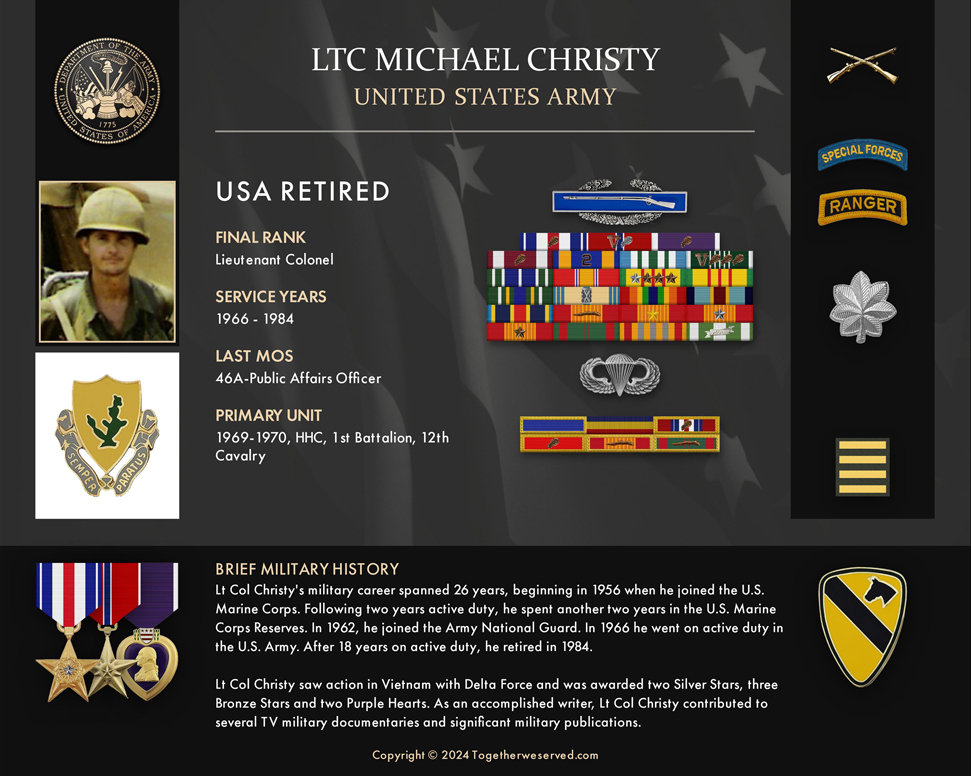

 It was March 1862, and the Civil War finally reached its long fingers into the Southwest. A lot of Americans forget that part. We remember Gettysburg, Antietam, and Richmond. We remember blue and gray lines clashing in cornfields and churchyards. But we forget Glorieta Pass, the fight that happened over three days and changed everything west of the Mississippi.
 On March 26, the two sides skirmished near Apache Canyon. By the 28th, they were fighting in full force in the narrowest part of the pass. The Confederates under Lt. Col. William Scurry pushed hard, muscling Union forces back along the trail with artillery and bayonet charges.
  It wasn't a large battle. Not by Eastern standards. But it was decisive. Some historians call it the "Gettysburg of the West." But not because of the body count. It was about momentum. Where Gettysburg stopped Lee from heading north, Glorieta Pass stopped the Confederacy from heading west.



 The ship was carrying manganese ore from Brazil and made a routine stop in Barbados before heading north. She was expected in Baltimore on March 13. She never arrived. In fact, that was the last anyone ever saw of her. The Navy launched an investigation that turned up nothing conclusive. Mechanical failure, bad weather, and German sabotage or a U-boat were considered.
 Of course, the Triangle angle leans more into myth than fact. The ocean is vast and unforgiving. Ships sink. Wrecks are hard to find, especially in deep water. But it's easy to see why the story stuck. A massive U.S. Navy ship vanishes without a trace during wartime. No answers. No closure. It's the kind of mystery that gets passed down through generations.
 This is where TWS can help. We have just invested in a high quality Fujitsu book and photo scanner that can scan any size of photo or yearbook. As a service to our members, we would like to offer you a free photo scanning service for your most significant photos from your service which we will then return to you, in original condition, along with a CD containing your photo files.
 With diplomacy at a dead end after the failed Rambouillet talks, NATO faced a pivotal decision. For decades, it had existed to defend members against external threats. Kosovo, however, was not a NATO member.
  Serbia fought back with integrated air defenses and dispersed units. On March 27, a Serbian missile shot down a U.S. F-117 Nighthawk, marking the first loss of a stealth aircraft in combat. NATO pilots flew in contested skies, often under strict rules to avoid civilian casualties. Still, errors occurred, including the accidental bombing of the Chinese embassy in Belgrade, a diplomatic disaster that nearly derailed the entire operation.
 And for NATO as a whole, it was a trial by fire: an alliance built to deter war had now become a warfighting coalition, changing the way it would view future crises in Afghanistan, Libya, and beyond.
 We are still searching for Boot Camp/ Basic Training Photos and Yearbooks. So if you have yours available, please contact us at

 World War II was truly a global conflict occurring on the European front, in Italy, North Africa, the Pacific Ocean region, and with the nations of Western Asia.
 Two of the early and significant songs of the era were with Vera Lynn's sultry voice singing We'll Meet Again and There Will be Bluebirds Over the White Cliffs of Dover.
 The roots of "Boogie Woogie Bugle Boy of Company B" are credited to Clarence Zylman of Muskegon, Michigan
 Vietnam: An Era of Anti-War Rage
 In 1965 Barry McGuire sang a chilling song profiling current and future events with The Eve of Destruction. It is still relevant in many aspects.
 In 1969 Kenny Rogers and the First Edition brought this "tear your heart out" Billboard number 19 song back. The song profiled a paralyzed Vietnam veteran seeing his wife leave the house front door most nights.


 In the early stages of the Cold War, an impending "Doomsday" weighed heavily upon the minds of Americans. President Truman instituted the Federal Civil Defense Administration, which began issuing brochures, films, and radio advertisements to prepare citizens to survive a nuclear attack. Dog tags were issued to many school children who also went through "duck and cover" drills, as they were trained to curl up under their school desks after a nuclear bomb detonation, flash of light. Siren tests sounded at regular intervals, and national and local publications ran articles about the imminent danger of nuclear war. Radio dials were marked with triangles at stations that would be used by CONELRAD broadcasts, which would kick in as soon as all regular broadcasts ceased after the alarm sounded. Some American citizens were building backyard bomb shelters while the local government, as well as private corporations, established larger shelters under various buildings. Many believed that the best of these efforts would be hopeless in the event of a nuclear nightmare.
 Seeking to be victorious in a potential nuclear war, authorities developed a plan for using the United States nuclear arsenal and designated it the Single Integrated Operational Plan (SIOP). The goals of the Doomsday Plan (a gruesome term that included SIOP, COG, and various sub-strategies) were to ensure that order was preserved in society, the economy was not destroyed, food was rationed, and cultural artifacts (such as the Declaration of Independence) were rescued. There were nuclear flash sensors placed around the country. Code words were provided for selected officials, and phone numbers were given that bypassed the normal phone systems. A broadcasting center was set up under the name Wartime Information Security Program (WISP) to control what information was released to the public, including prerecorded messages from the President. However, the ultimate goal was to ensure the government survived and could maintain adequate information for decision-making through surveillance and analysis of world events. To do that, it was necessary to establish communications between the President and commanders of military forces, as well as with leaders of allied and enemy governments.
 Obviously, a presidential "bomb shelter" was a necessity. Code-named "Site R", and built deep under Raven Rock mountain, a Deep Underground Communication Center (DUCC) was coordinated by the Army from Ft. Ritchie near the Maryland-Pennsylvania border a few miles from Camp David. To disperse other governmental leaders and functions, other bunkers were located at Berryville, Virginia, under Mt. Weather (code-named "High Point"); Culpepper, Virginia (Mt. Pony); and White Sulfur Springs, West Virginia, under the Greenbrier Resort (code-named Casper).
  Another variable to increase the odds of the President surviving Doomsday was a movable location, which made targeting more difficult. The National Emergency Airborne Command Post (NEACP), code-named "Night Watch", consisted of several shielded and specially configured Boeing airplanes (stationed at Andrews Air Force Base near Washington, DC) with at least one plane ready for takeoff within 15 minutes of an attack alert. When the president traveled on Air Force One, a NEACP plane often flew to a nearby location.
  Both the Wright and the Northampton had a huge dish-like structure used for Troposphere Scatter Communications (TROPO.) There were land-based TROPO dish sites located in Massachusetts, North Carolina, and Delaware. The alert ship usually operated within a few hundred miles of one of those land sites. The gyro-stabilized TROPO equipment provided the capability for access to commercial and military telephone networks. To maintain operational security, the ships took steps to decrease radio direction-finding activities from hostile sources attempting to trace the location of the alert ship. The TROPO system provided, difficult to zero in on, telephone, teletype, and data circuits with top priority for the Command Posts. The NECPA ships used voice radio call signs Zenith (Wright) and Sea Ruler (Northampton) during communication with other ships, aircraft, and shore stations.
 The Wright and Northampton had interior spaces capable of pressurization to prevent contamination from nuclear fallout. The Northampton had an exterior salt-water wash down system. Each ship had a smaller replica of the Pentagon's War Room. The Wrights' command compartments had projection equipment with large screens and a wall of status boards and maps mounted on tracks which could be rolled into view. One entire space was filled with teletype printers. The crew totaled over 1,200, with 200 of those with duties just to operate and maintain the communications equipment.
  Presidents Eisenhower, Kennedy, and Johnson went aboard the Northampton before the Wright was commissioned. In April of 1967, the Wrights accompanied President Johnson to the Latin American Summit Conference held in Uruguay. In January 1968, the Wright was urgently called back from the Florida area and placed on high alert when the USS Pueblo was captured by North Korea. President Johnson traveled to Central America in July 1968 for a meeting of the Presidents of the Central American Republics. The Wright was in the shipyards and was unable to get underway. With short notice, the Northampton left port at about 0200, traversed the Panama Canal, and lay off the Pacific Coast of Latin America while President Johnson met with the leaders of El Salvador, Nicaragua, Costa Rica, Honduras, and Guatemala.


 "Faded Yellow Ribbon: The Untold Story of the Brave Men Who Endured the Greatest Survival Story of World War II" by Iraq War veteran Ryan Kelly is a Pacific War novel with a long memory. Most importantly, it's inspired by a true story.
 One of the more moving elements is the way the novel allows space for dark humor and stubborn personality, a military reality that those who serve know all too well. The jokes, the needling, the occasional absurdity are not there to make the experience "fun." They're there because these Marines are humans and reaffirm their humanity. In that sense, the lighter moments don't interrupt the gravity. They underline it.

 TWS Invite Cards
 As you may know, TWS has been working with the VA to help our veterans who may be isolated find local veterans for companionship and camaraderie. We also provide a way for them to display their military history to family and friends, and to find those they may have served with for a buddy statement.
 Your Invite QR Code is now available to download to your phone and share with the veterans you may meet. Scanning this QR code will give you credit for their membership. You receive 6 months of full membership for every 5 people who join through your invite. If 50 people join, you'll receive a lifetime membership!
 John Ripley, the Marine Who Blew Up the Dong Ha Bridge, to Receive the Medal of Honor
 Hanging Beneath the Bridge
 From Iraq to Iran: How Congress Handed Over War Powers to the Presidency
 Hegseth's 'Stupid Rules of Engagement' Line and What ROE Actually Do
 Commanders Accused of Framing Iran War as Biblical Mandate, Jesus' 'Return'
 Veterans Help Solve 22-Year-Old Cold Case in Florida
 Montford Point Marines - The Positive Impact of Your Sponsorship


